
Se avete provato a iscrivervi alla nostra newsletter dalla homepage e non avete trovato il modulo, non è un errore. È...
Latest posts
-
 Perché abbiamo disattivato la newsletter pubblicaLeggi l'articolo
 -
 noreplay@tessilmoda.net: lo "sbaglio" che racconta chi siamoLeggi l'articolo
Partiamo da una confessione. Quando abbiamo configurato il nostro piccolo plugin per il promemoria del carrello...
-
 Salviette struccanti lavabili: come usarle correttamenteLeggi l'articolo
Hai appena acquistato le tue prime salviette struccanti lavabili — o stai valutando di farlo — e ti chiedi...
-
 Dietro le Quinte del nostro e-CommerceLeggi l'articolo
Cos'è successo a cavallo tra il 2025 e i primi mesi del 2026?Gli ultimi mesi, da dicembre 2025 a marzo 2026, sono...
-
 Addio dischetti usa e getta: perché passare alle salviette struccanti in microfibra professionale?Leggi l'articolo
Ogni anno, milioni di dischetti di cotone finiscono nelle discariche. Oltre all'impatto ambientale, l'uso combinato...
-
 Come avere un bucato morbidissimo senza asciugatriceLeggi l'articolo
Perché i panni si induriscono dopo il lavaggio ? Se avete sperimentato anche voi l’“effetto cartone”, sui panni...
-
 Come Lavare la Lana Senza Rovinarla: Guida DefinitivaLeggi l'articolo
Perché la lana di oggi ha bisogno di più cura ? Approfitto di questi primi giorni del 2026, visto che ho tempo per...
-
 Attenzione all'uso dell'ammoniaca per il bucato: guida pratica e avvertenzeLeggi l'articolo
Di recente mi sono imbattuto in un video, dove si consigliava l'utilizzo dell'ammoniaca per il lavaggio della lana,...
-
 Che Cosa Sono le Certificazioni Tessili e Perché Sono ImportantiLeggi l'articolo
Cosa sono le certificazioni tessili e a cosa servono Cosa sono le certificazioni ? Immagina che ogni prodotto tessile...
-
 Guida Completa a Muffole e Calzari in Microfibra con Ioni d'Argento per Centri EsteticiLeggi l'articolo
Cosa sono e come sono fatti guanti/muffole e calzari agli ioni d’argento I guanti (o muffole) e i calzari a sacchetto...
Blog categories
Search in blog
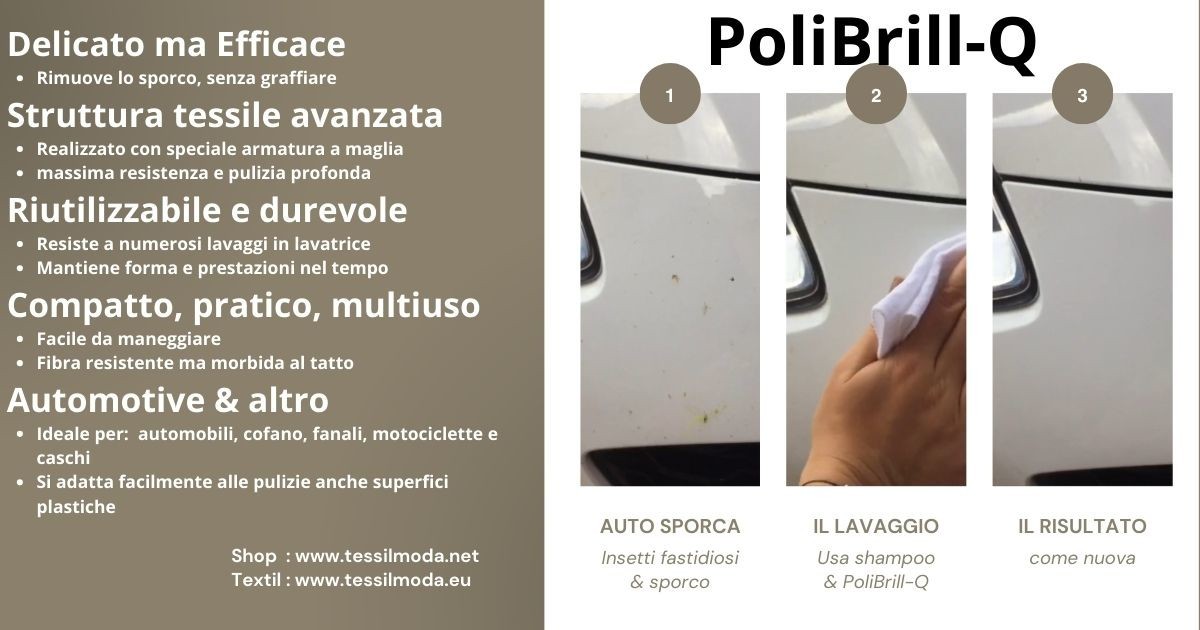
Panno PoliBrill-Q per la Pulizia di Auto, Moto e Superfici Plastiche
In questo articolo abbiamo certato di rispondere alle domande più comuni sull’uso del panno PoliBrill-Q in ambito domestico, con un focus sulla pulizia automotive. Se stai cercando il miglior panno per pulire la macchina o vuoi sapere come togliere insetti dal cofano senza graffiare la vernice, sei nel posto giusto, cercando con applicazioni pratiche di spiegare in modo chiaro tutto ciò che c'è da sapere e può essere utile, nell'utilizzo del nostro panno.
Di seguito un indice per raggiungere più facilmente la parte di articolo che potrebbe esservi più utile.
Cos’è il panno PoliBrill-Q e cosa lo rende unico rispetto agli altri panni?
Il PoliBrill-Q è un panno per la pulizia realizzato in fibra di polipropilene con una speciale armatura tessile (struttura a maglia). Questa costruzione unica lo rende resistente ma delicato: è in grado di rimuovere efficacemente lo sporco ostinato senza graffiare le superfici. A differenza dei comuni panni in microfibra o cotone, PoliBrill-Q vanta un materiale di altissima qualità e una trama innovativa: non lascia pelucchi, non si sfilaccia facilmente e dura a lungo anche con uso intensivo. La sua specifica struttura a maglia gli permette di aderire bene anche a superfici irregolari con scanalature, angoli e fessure, raggiungendo lo sporco annidato in profondità.
PoliBrill-Q fa parte della nostra linea PoliBrill, che include panni specializzati per varie superfici. Ad esempio, il PoliBrill-O è pensato per metalli (come frigorifero o fornelli) e il PoliBrill-T per superfici delicate come plastica e laminati. PoliBrill-Q, invece, è stato progettato specificatamente per le esigenze di pulizia di auto e moto, un “alleato affidabile per una perfetta pulizia di cofani, fanali di motociclette e automobili”. In altre parole, PoliBrill-Q è il panno ideale quando bisogna eliminare insetti dalla carrozzeria o dalla visiera del casco senza rovinare nulla. "Pulire si, ma con meno fatica”, nato da esigenze personali, è il motto che ci ha fatto sviluppare la gamma di panni PoliBrill, per sottolinearne l'efficacia unita alla semplicità d’uso. In sintesi, ciò che rende unico questo panno è proprio la combinazione tra efficacia nella pulizia e rispetto delle superfici, caratteristica difficile da trovare in altri panni tradizionali.
Su quali superfici si può utilizzare il panno PoliBrill-Q?
PoliBrill-Q è estremamente versatile e può essere usato su un’ampia gamma di superfici, specialmente nel contesto di auto e moto. È adatto praticamente ad ogni superficie comune senza causare danni. Ecco alcune delle superfici su cui PoliBrill-Q eccelle:
Superfici in plastica (interni ed esterni): il panno è efficace su parti in plastica come il cruscotto dell’auto, i pannelli delle portiere, i paraurti non verniciati o le carene in plastica della moto. Grazie alla sua struttura, rimuove polvere e sporco da queste superfici senza graffiarle né opacizzarle. Si comporta benissimo come panno per superfici in plastica, aderendo anche alle texture irregolari e ripulendo le scanalature. Puoi usarlo leggermente umido per catturare la polvere e lo sporco depositato, evitando l’uso di spray chimici nella maggior parte dei casi.
Carrozzeria auto (parti verniciate come cofano e paraurti): PoliBrill-Q è ideale per la pulizia della macchina, in particolare per la carrozzeria esterna. È abbastanza delicato da poter essere passato sulla vernice dell’auto (anche su finiture lucide o delicate) senza lasciare micro-graffi, ma al contempo riesce a rimuovere macchie e residui difficili. Ad esempio, risulta ottimo come panno per togliere gli insetti dal cofano e dal frontale dell’auto dopo un viaggio: la sua trama aiuta a sollevare i residui di moscerini e altri insetti schiacciati senza bisogno di grattare aggressivamente; anche in questo caso basta inumidire il panno con acqua oppure con aggiunta di shampoo per auto e passare il panno. In più, non avendo parti abrasive, preserva il trasparente della vernice. Se stai cercando il miglior panno per pulire il cofano dell’auto, PoliBrill-Q è un candidato perfetto.
Fanali (auto e moto) e parabrezza: I fanali delle auto e delle moto spesso accumulano insetti e sporcizia che possono ridurre la luminosità. PoliBrill-Q rende semplice la pulizia dei fanali moto e auto: basta inumidirlo (come descritto prima) e passarlo sui fari anteriori per rimuovere moscerini e patina stradale. Essendo delicato, non graffia la plastica trasparente dei fanali né il vetro del parabrezza. Può essere usato anche sul parabrezza dell’auto o sul cupolino della moto per eliminare i residui degli insetti volati contro durante la marcia. Dopo il passaggio del panno, i fari torneranno trasparenti e il parabrezza pulito, migliorando visibilità e sicurezza.

Nell’immagine, un panno PoliBrill viene utilizzato per pulire la carrozzeria di un’auto
- Superfici della moto (carrozzeria e parti cromate): Sulla moto, il PoliBrill-Q si può usare per pulire il frontale, il cupolino, il serbatoio, i parafanghi e anche eventuali parti cromate o in metallo verniciato. Rimuove lo sporco stradale e gli insetti dalla moto con facilità. Ad esempio, gli specchietti retrovisori e la carena anteriore della moto spesso sono ricoperti di insetti dopo un giro: passando il panno umido, questi spariscono in pochi secondi. Non serve applicare troppa forza, ma adeguata allo sporco, che una volta tolto per ritornare asciutto e lucido basta passare una pelle sintetica specifica per questo settore.

Nell’immagine, il PoliBrill-Q viene utilizzato per pulire il serbatoio di una moto
Casco (calotta e visiera): Il PoliBrill-Q è abbastanza delicato per il casco della moto, compresa la visiera trasparente. Puoi quindi utilizzarlo per pulire l’esterno del casco, rimuovendo polvere, fango e soprattutto insetti incollati dopo l’uso della moto. (Nei paragrafi seguenti approfondiamo proprio come pulire il casco della moto senza graffiarlo nel dettaglio.) In generale, sapendo che il casco ha superfici curve e la visiera è sensibile ai graffi, un panno morbido ma efficace come PoliBrill-Q è l’ideale: si adatta bene alle forme curve e non rovina il trasparente della visiera mentre rimuove lo sporco. Anche per i caschi da scooter o da bicicletta, o per la visiera del casco integrale, questo panno offre una pulizia impeccabile con semplice acqua, oppure con l'aggiunta di shampoo per auto.
PoliBrill-Q si può usare su quasi tutte le parti di auto e moto, dalle plastiche ai metalli verniciati, dal vetro al plexiglass del casco. La sua versatilità lo rende un ottimo strumento multiuso per la cura del veicolo. Tieni presente che produciamo anche altri panni PoliBrill specifici (ad esempio il PoliBrill-T per superfici puramente plastiche), ma il modello PoliBrill-Q è stato concepito per l’uso su veicoli, garantendo così una copertura efficace per la maggior parte delle esigenze di pulizia nel settore automotive.
Perché il Polibrill Q non graffia?
Grazie alla sua trama e un filato in polipropilene di altissima qualità, PoliBrill-Q rimuove lo sporco senza graffiare e con poco sforzo, adattandosi anche alle curve e agli angoli della superficie. È proprio su superfici come questa (carrozzeria esterna) che il panno esprime al meglio “la potenza che pulisce con meno fatica”, rendendo la pulizia dell’auto più semplice e veloce.
Come si pulisce il casco della moto senza graffiarlo?
Per pulire il casco della moto senza graffiarlo ti basta utilizzare il panno PoliBrill-Q correttamente inumidito e un po’ di pazienza. Ecco alcuni consigli pratici per un risultato ottimale:
Rimuovi la polvere grossolana: Se il casco è molto impolverato o con fango secco, per prima cosa scuotilo o passalo sotto un leggero filo d’acqua per eliminare le particelle abrasive più grosse. Questo evita che lo sfregamento trascini granelli duri sulla visiera. (In generale, qualunque panno usato su una superficie polverosa potrebbe causare micro-graffi se c’è sabbia; meglio prevenire sciacquando rapidamente il casco.)
Usa PoliBrill-Q ben inumidito, sulla visiera e la calotta: Inumidisci bene il panno PoliBrill-Q con acqua (o acqua con un goccio di detergente neutro se il casco è molto sporco). Strizzalo quanto basta: deve essere umido ma non gocciolante. A questo punto passalo delicatamente sulla visiera del casco con movimenti orizzontali o verticali leggeri, senza premere troppo. La struttura morbida del panno catturerà sporco e insetti senza graffiare la superficie trasparente. Prosegui pulendo anche la calotta (l’esterno rigido del casco), che spesso ha insetti e macchie: il panno li rimuoverà con facilità, data la sua efficacia contro gli insetti ostinati.
Ammorbidisci gli insetti incrostati: Se sulla visiera ci sono molti moscerini e insetti secchi, un trucco efficace è appoggiare il panno PoliBrill-Q bagnato sulla zona e lasciarlo agire per circa 30 secondi. In questo modo l’acqua ammorbidisce i residui organici. Dopodiché risciacqua il panno e passa nuovamente il panno con movimenti leggeri: vedrai che anche gli insetti più attaccati verranno via senza dover grattare. PoliBrill-Q, grazie alla sua struttura resistente ma delicata, rimuove efficacemente anche gli insetti più ostinati senza graffiare una caratteristica perfetta per la visiera del casco che è molto delicata.
Asciuga e rifinisci: Dopo aver eliminato tutto lo sporco, puoi passare un secondo panno morbido e asciutto ( in cotone, in microfibra, oppure meglio ancora, un panno in pelle sintetica ) per asciugare la visiera ed evitare eventuali aloni d’acqua. In molti casi, però, se il PoliBrill-Q era ben strizzato, la superficie potrebbe asciugarsi quasi senza aloni. Assicurati solo che non rimangano tracce umide che potrebbero attirare polvere.
Seguendo questi passi, riuscirai a pulire il casco della moto senza graffi e a mantenerlo trasparente e brillante. PoliBrill-Q è ottimo per questa operazione perché unisce efficacia pulente (rimuove insetti rinsecchiti e sporcizia, che si è stampata sulla parte anteriore del vostro veicolo, durante il viaggio) a delicatezza sui materiali: la visiera in policarbonato non subirà micro abrasioni come potrebbe accadere con spugne abrasive o panni ruvidi. Dopo la pulizia, il tuo casco sarà come nuovo, pronto per la prossima uscita, e la visiera cristallina ti garantirà massima visibilità in strada.
Qual è il miglior panno per pulire il cofano dell’auto?
Il cofano dell’auto è una delle parti più esposte a sporco e insetti durante la guida, specialmente dopo viaggi ad alta velocità. Per pulirlo al meglio, serve un panno che unisca morbidezza (per non rovinare la vernice) ed efficacia pulente (per togliere residui difficili come i moscerini e insetti vari). In questa ottica, PoliBrill-Q può essere considerato il miglior panno per pulire il cofano dell’auto, grazie alle sue caratteristiche uniche.
PoliBrill-Q è stato progettato proprio pensando a situazioni come questa: rimuovere gli insetti dal cofano e dalla parte frontale dell’auto senza graffiare la carrozzeria. La sua trama “a rete” in polipropilene esercita un leggero attrito che solleva lo sporco, ma al tempo stesso è soffice abbastanza da non danneggiare la vernice o il trasparente. Molti panni tradizionali richiederebbero di usare prodotti chimici aggressivi o di strofinare con forza per togliere i resti di insetto; con PoliBrill-Q, spesso basta inumidirlo con acqua o con aggiunta di un detergente specifico (es.: shampoo per auto) e passarlo leggermente per vedere lo sporco dissolversi. Abbiamo pubblicato diversi video in merito sui nostri canali social vedi YouTube oppure tiktok.
Un altro vantaggio è che il panno copre una buona superficie ed è maneggevole, quindi puoi pulire rapidamente l’intero cofano. Ad esempio, dopo un viaggio in autostrada troverai sicuramente decine di insetti spiaccicati sul frontale: passa PoliBrill-Q umido su tutto il cofano e vedrai che i residui verranno via con meno fatica rispetto a usare altri metodi. Questo panno è apprezzato proprio perché “pulisce con meno fatica”.
Infine, usando PoliBrill-Q riduci anche il rischio di creare piccoli segni circolari nella vernice, cosa che può accadere con spugne o panni non adeguati. Mantieni comunque la superficie ben lubrificata (con acqua o detergente) mentre pulisci, e risciacqua il panno spesso se accumula troppo sporco, così da non trascinare i residui sul cofano. In conclusione, PoliBrill-Q risponde a tutti i requisiti del “panno ideale” per il cofano: delicato sulla carrozzeria, efficace sui moscerini, riutilizzabile e facile da pulire dopo l’uso. È quindi una scelta eccellente per chi vuole mantenere la propria auto splendente senza sforzi e senza ricorrere a costosi trattamenti professionali.
Come togliere insetti e moscerini dal cofano dell’auto?
Togliere i moscerini e gli insetti schiacciati e rinsecchiti sul cofano può sembrare un compito ostico, ma con il PoliBrill-Q diventa molto più semplice. Ecco un metodo passo-passo per rimuovere insetti & moscerini dal cofano dell’auto in modo efficace, senza graffiare la vernice:
Prepara il panno e la superficie: Inizia sciacquando grossolanamente il cofano con acqua (una rapida passata con un tubo o uno spruzzino) per ammorbidire lo sporco e far scivolare via la polvere. Poi prendi il tuo PoliBrill-Q e bagnalo con acqua pulita o acqua e shampoo per auto. Strizzalo leggermente: deve rimanere ben umido ma non eccessivamente gocciolante.
Passa il panno sugli insetti: Appoggia il panno umido sulla zona del cofano con molti insetti schiacciati. Non strofinare subito con forza. Invece, lascia che l’acqua del panno inumidisca e ammorbidisca i resti degli insetti per qualche secondo. Quindi comincia a muovere il panno avanti e indietro o con movimenti circolari molto ampi e leggeri, coprendo tutta l’area. Noterai che molti residui iniziano a venir via quasi immediatamente con questo primo passaggio.
Tratta gli insetti più ostinati: Se restano ancora tracce di insetti attaccati (ad esempio piccole macchie scure o aloni dove erano insetti più grandi), ripassa il panno esercitando una leggera pressione con le dita proprio su quei punti. Grazie alla sua texture, PoliBrill-Q fornisce un pizzico di abrasione delicata che aiuta a staccare anche i frammenti più resistenti senza graffiare il trasparente. Puoi anche piegare il panno e usare un angolo pulito per concentrarti su una macchia ostinata. In casi estremi, ri-inumidisci bene l’area: tieni il panno premuto sul punto ostinato per altri 30-60 secondi, poi prova di nuovo a strofinare dolcemente – il residuo dovrebbe sciogliersi e trasferirsi sul panno.
Risciacqua il panno durante il lavoro: Man mano che rimuovi i moscerini, il panno si riempirà di residui di insetto. È importante risciacquare frequentemente il PoliBrill-Q in un secchio d’acqua pulita (o sotto un rubinetto) durante la pulizia. Sciacquando, elimini dal panno i resti raccolti, evitando di ridistribuirli sul cofano. Inoltre così il panno rimane sempre pulito e umido, pronto a catturare altro sporco. Strizzalo e continua fino a che il cofano non è completamente pulito.
Asciuga e controlla il risultato: Dopo aver eliminato tutti i moscerini, risciacqua velocemente il cofano con acqua e poi asciuga la superficie con un panno morbido e asciutto. Anche una pelle sintetica o un panno in cotone oppure in microfibra asciutto vanno bene per assorbire l’acqua residua. Asciugare serve ad evitare macchie d’acqua (calcare) e a verificare che non siano rimasti aloni o qualche insetto sfuggito. Controlla il cofano in controluce: dovrebbe risultare lucido e senza puntini. Se noti qualche piccolo residuo che ti era sfuggito, riprendi il PoliBrill-Q umido e rimuovilo.
Utilizzando questo procedimento, togliere insetti e moscerini dal cofano diventerà un’operazione abbastanza rapida e a prova di vernice perfetta. Il trucco sta nel lasciare che il panno umido faccia ammorbidire lo sporco e nel non avere fretta di strofinare forte. PoliBrill-Q fa gran parte del lavoro “sollevando” i residui col minimo sforzo. Così, in pochi minuti, il frontale della tua auto tornerà lindo, evitando quell’antiestetica costellazione di insetti incollati e senza ricorrere a raschietti o spugne abrasive che avrebbero potuto rovinare la carrozzeria.
Come rimuovere il catrame dalla carrozzeria dell’auto?
Le macchie di catrame sulla carrozzeria sono un caso di sporco particolarmente ostinato. Il catrame (o bitume stradale) si presenta come piccole gocce o schizzi neri, spesso lungo le parti basse dell’auto o dietro le ruote, e aderisce tenacemente alla vernice. Può succedere dopo aver percorso strade appena asfaltate o aver preso buche con bitume fresco. Rimuovere il catrame con un semplice panno e acqua purtroppo non è efficace, anche il PoliBrill-Q da solo avrebbe difficoltà perché il catrame è idrorepellente e molto aderente. Tuttavia, PoliBrill-Q può comunque essere utile in combinazione con un prodotto specifico.
Ecco come procedere per eliminare il catrame dalla carrozzeria in sicurezza:
Usa un prodotto specifico per dissolvere il catrame: Procurati un prodotto, a spray o pennello, formulato appositamente per sciogliere catrame, bitume, residui di colla e simili. Se ne trovano di diverse marche nei negozi di accessori auto o ferramenta. Anche se noi non vendiamo direttamente questo tipo di prodotto, è un acquisto consigliabile se spesso ti ritrovi macchie di catrame sull’auto. Naturalmente ci sono cose specifiche e professionali come il Deca Flash (Ma-Fra), in alternative ci sono cose un po meno professionali come il il Flash (NCH), oppure cose più casalinghe come un comune lubrificante spray tipo il WD-40, o semplicemente il carburante Diesel, sono solo alcuni tra i prodotti che hanno capacità solventi sul catrame, alcuni sono appunto rimedi professionali altri casalinghi utili se già li possiedi.
In ogni caso, spruzza oppure spennella il prodotto abbondantemente sulla macchia di catrame, ricoprendo bene l’area contaminata. Attendi il tempo indicato nelle istruzioni (di solito qualche minuto) per far sì che il solvente ammorbidisca e sciolga il catrame.Rimuovi il residuo con PoliBrill-Q: Dopo aver lasciato agire lo spray dissolvente, il catrame inizierà a sciogliersi (diventa marrone e più fluido). A questo punto prendi il tuo panno PoliBrill-Q pulito ed inumidito e usalo per tamponare e pulire la zona. Non è necessario strofinare forte: generalmente il catrame verrà via perché il solvente lo ha staccato dalla vernice. PoliBrill-Q ti aiuta a raccogliere e rimuovere delicatamente tutti i residui di catrame disciolto dalla carrozzeria, grazie alla sua resistenza meccanica e capacità pulente. Se la macchia era molto grande, potresti dover ripetere l’operazione una seconda volta applicando ancora un po’ di prodotto e usando un lato pulito del panno. Continua finché la carrozzeria risulta pulita.
Lava bene il panno dopo l’uso: Il catrame è una sostanza oleosa e appiccicosa. Dopo averla rimossa, noterai che sul panno PoliBrill-Q potrebbero restare macchie scure o unto. È fondamentale lavare immediatamente il panno (vedi la sezione successiva su come lavarlo) per eliminare ogni traccia di catrame dalle sue fibre. Se lo lasciassi secco senza lavarlo, il catrame indurito potrebbe rovinare il panno, ridurne l’efficacia pulente o addirittura renderlo inutilizzabile. Quindi, appena finito, sciacqua il PoliBrill-Q con acqua molto calda e sapone sgrassante; eventualmente fai un lavaggio in lavatrice separato per rimuovere completamente l’olio di catrame. Dopo questo trattamento, il panno tornerà pulito e pronto per nuovi utilizzi.
PoliBrill-Q può certamente aiutarti nella pulizia post-catrame, ma ha bisogno di un “alleato” chimico per sciogliere lo sporco prima. La buona notizia è che, grazie alla sua robustezza, il panno resiste bene a questo tipo di operazioni e non si rovina: potrai quindi continuare ad usarlo a lungo anche dopo aver rimosso macchie difficili come quelle di catrame (basta aver cura di lavarlo accuratamente). Con la giusta combinazione di prodotto per rimuovere il catrame e PoliBrill-Q, anche quei fastidiosi puntini neri sulla carrozzeria diventeranno un brutto ricordo.
Come si lava il panno PoliBrill-Q dopo l’uso?
Una parte importante per assicurare lunga vita e prestazioni al tuo PoliBrill-Q è pulirlo correttamente dopo ogni utilizzo. Fortunatamente, la manutenzione di questo panno è semplice: essendo realizzato in fibra sintetica polipropilenica di alta qualità, può essere lavato e riutilizzato molte volte mantenendo la sua efficacia. Ecco alcuni consigli su come lavare il panno PoliBrill-Q:
Lavaggio in lavatrice (consigliato): Puoi tranquillamente lavare PoliBrill-Q in lavatrice. È consigliato un ciclo fino a 60°C di temperatura utilizzando un normale detersivo per bucato. Una temperatura di 40-60°C è ideale per rimuovere sporco e batteri accumulati nel panno senza danneggiarne le fibre. Evita temperature più alte di 60°C, perché potrebbero accorciare la vita del panno (anche se il materiale è resistente, un calore eccessivo a lungo andare potrebbe deformare le fibre sintetiche). Assicurati di usare il detersivo in quantità normale, come faresti per dei capi delicati, NON USARE AMMORBIDENTI !!!
A mano o pre-trattamento: In caso di fretta o assenza di lavatrice, puoi anche lavare il PoliBrill-Q a mano in acqua tiepida. Mettilo a mollo in un secchio o lavello con acqua calda (fino a ~50-60°C) e un po’ di detersivo per piatti o sapone neutro sgrassante. Lascialo in ammollo per qualche minuto, poi strofinalo leggermente tra le mani, soprattutto nei punti dove vedi macchie (ad esempio residui di sporco nero o di insetti). Sciacqualo abbondantemente finché l’acqua non esce pulita. Noterai che il panno tornerà come nuovo, senza tracce visibili di sporco.
Rimozione di macchie e igienizzazione: Se il panno è molto sporco (per esempio dopo aver tolto catrame o grasso) o vuoi igienizzarlo a fondo, puoi aggiungere durante il lavaggio un po’ di candeggina delicata. Si consiglia l’eventuale uso di un goccio di candeggina insieme al detersivo per igienizzare completamente il panno. Ad esempio, puoi aggiungere mezza tazzina di candeggina in lavatrice quando lavi il PoliBrill-Q. La candeggina aiuta a eliminare macchie organiche ostinate e ad assicurare una pulizia profonda delle fibre. In alternativa, va bene anche dell’aceto bianco durante il risciacquo finale: l’aceto rimuove eventuali residui di detersivo e neutralizza odori, lasciando il panno fresco.
Attenzione a ammorbidente e asciugatrice: Non utilizzare ammorbidente sul PoliBrill-Q. Gli ammorbidenti tendono a lasciare una patina cerosa sulle fibre dei panni da pulizia, riducendone la capacità di assorbire lo sporco. PoliBrill-Q è già morbido di suo e non necessita di ammorbidenti (rimarrà morbido anche dopo il lavaggio). Per quanto riguarda l’asciugatura, l’ideale è far asciugare il panno all’aria. Basta stenderlo dopo lavato e in poche ore sarà asciutto, pronto all’uso. Evita se possibile l’asciugatrice ad alte temperature, poiché il calore intenso potrebbe deformare leggermente le fibre di polipropilene; se proprio devi usare l’asciugatrice, imposta una temperatura bassa o il programma per sintetici delicati.
Controlla il panno prima del prossimo uso: Dopo il lavaggio, ispeziona il tuo PoliBrill-Q. Noterai con piacere che non si sfilaccia e non perde la sua forma: questo panno è progettato per durare e mantiene intatte le sue proprietà pulenti anche dopo molti lavaggi. Se dovessi vedere ancora qualche macchiolina residua (ad esempio aloni di grasso), valuta di ripetere un lavaggio o un ammollo con acqua calda e sapone. In generale comunque, dopo un normale lavaggio, il panno tornerà pulito e privo di odori, pronto per essere riutilizzato più volte.
Seguendo queste indicazioni, il tuo PoliBrill-Q durerà a lungo e resterà sempre performante. La possibilità di lavarlo e riutilizzarlo decine di volte lo rende anche economico ed ecologico: non dovrai più comprare pile di panni usa e getta o spugne che si rovinano subito. Con la giusta cura, PoliBrill-Q ti accompagnerà in tantissime pulizie di auto, moto e superfici di casa, offrendo sempre la stessa efficacia (proprio grazie alla qualità costruttiva che abbiamo descritto). Dunque, dopo ogni uso ricordati di dedicare pochi minuti al lavaggio del panno: è un piccolo sforzo che verrà ripagato da un panno sempre come nuovo e pronto all’azione!
Speriamo che questo articolo ti abbia aiutato a conoscere meglio il nostro panno PoliBrill-Q e il suo utilizzo in ambito automotive. Abbiamo visto cos’è e perché è diverso dagli altri panni, dove usarlo (dalla plastica del cruscotto alla carrozzeria, dai fanali al casco), come prendersene cura lavandolo correttamente e come affrontare anche lo sporco più ostinato come moscerini, insetti in genrale e catrame. PoliBrill-Q si rivela un buon prodotto per la pulizia, per chi desidera mantenere auto e moto pulite e splendenti con facilità, anche in un contesto domestico e non professionale. Se hai altre domande sul suo utilizzo, non esitare a contattare il nostro team, a consultare i video dimostrativi nella pagina del prodotto, dove troverai ulteriori spunti su come trarre il meglio da questo panno, infine lascia un commento qui sotto se ti servono ulteriori informazioni.
Buona pulizia!
 Visita la guida come si usa il PoliBrill-TVisita le domande frequenti sul PoliBrill-OVisita la guida su quale panno PoliBrill scegliere Scopri il prodotto PoliBrill-Q by Tessilmoda
Se hai altre domande o vuoi contattarci, lascia un commento oppure scrivici!
Posted in: Casa e Tempo libero
Related posts
-
 Panni PoliBrill: la soluzione ideale per pulire formica, PVC, parquet e molto altroQual è il panno più adatto per pulire diverse superfici? Scegliere il panno giusto per la pulizia è fondamentale per...Leggi l'articolo
 -
 Domande frequenti sul panno pulizia PoliBrill-ODomande frequenti sul panno pulizia PoliBrill-O Ecco come abbiamo cercato di spiegare nelle venti domande più...Leggi l'articolo
 -
 PoliBrill-T: Domande e Risposte sul Panno Innovativo per la Pulizia DomesticaPoliBrill-T: Domande e Risposte sul Panno Innovativo per la Pulizia Domestica Benvenuti in questa guida dedicata a...Leggi l'articolo
 -
 Nuova applicazione di PoliBrill-T su pelle | Tessilmoda BlogIl PoliBrill-T è un panno multiuso in polipropilene nato per pulire superfici quali formica, PVC, vetro e laminati,...Leggi l'articolo
Leave a comment